
Responsible gambling tools are most useful when they are understood before money is deposited, not only after play becomes difficult to manage. Canadian readers assessing casino lussurio should treat limits, reality checks and self-exclusion as practical account controls rather than promises of harmless play. The available information describes several options, but it does not establish that every control works identically in every province, payment method or account situation. A careful review therefore means checking what can be activated, how long it lasts, whether it can be changed immediately and what happens to an account during a restriction.

Start by separating control tools from gambling advice
A deposit limit restricts how much money can be added during a chosen period. A wagering limit addresses the amount staked, while a loss limit focuses on the amount that can be lost. These are different safeguards. Someone who deposits a large balance and plays cautiously may be affected mainly by a deposit ceiling; someone who deposits modestly but plays rapidly may need a wagering or loss limit. Selecting the wrong type can create a false sense of protection.
Time or session limits are designed to interrupt long periods of play. Reality checks can remind a player how long a session has lasted, giving them an opportunity to pause and review the situation. A cooling-off period is stronger: it temporarily restricts access for a defined time. Self-exclusion is generally the most decisive option listed, because it is intended to prevent account access rather than simply encourage a break.
These controls do not change game outcomes, recover losses or make gambling an income source. They also cannot remove every risk if a player moves to another account or platform. Before playing, decide which behaviour needs controlling: spending, duration, frequency or access itself. Record the selected limit and its review date. If gambling is causing financial, emotional or relationship harm, use support services instead of relying only on a technical account setting.
How to choose a limit that reflects real spending
Begin with money that is genuinely available after rent, food, debt payments, savings and other essentials. Do not define a gambling budget from a credit limit or from money expected later. A weekly or monthly figure is easier to monitor than a vague statement such as “I will be careful.” Include deposits made through every payment method, not just the method most often used.
Next, test the proposed limit against ordinary interruptions. Would an unexpected bill make the amount uncomfortable? Would losing it encourage another deposit? Would the limit still feel affordable after a poor week? If the answer to any question is no, reduce the amount or choose a cooling-off period instead. A limit should be set before promotional offers, wins or losses influence judgement.
Keep a separate record of deposits, withdrawals, time spent and the balance after each session. This makes it easier to notice escalation, such as increasing stakes to recover losses or extending play beyond the planned stop time. Do not treat a win as permission to raise the budget immediately. Any published minimums, maximums, reset periods or changes to limits should be confirmed in the account terms because the available material does not establish identical rules for all users.
What happens when a restriction meets verification?
Account controls and identity checks serve different purposes. A limit manages gambling behaviour; verification confirms identity, residence or ownership of a payment method. The available information says that government identification, proof of address and payment-ownership documents may be requested, particularly before a withdrawal. A pending verification review may therefore affect access to funds even when a player has set responsible-gambling controls.
Readers should save confirmation of every limit, cooling-off request or self-exclusion request, including the date and any reference number. If a restriction is submitted through live chat or email, keep the conversation. Avoid creating another account to bypass a restriction, since duplicate registrations may breach account rules and can complicate later checks. Do not assume that closing a browser, deleting an app or removing a payment card is equivalent to self-exclusion.
The published information describes verification windows of up to 72 hours, while noting that additional checks may take longer. That is not a guarantee of resolution, and it does not confirm that a responsible-gambling request will be processed within the same period. If access remains available after a self-exclusion request, stop depositing and contact support promptly. For broader guidance, the Responsible Gambling Council’s public resources offer Canadian-focused information independent of a casino account.
Offshore status changes the review questions
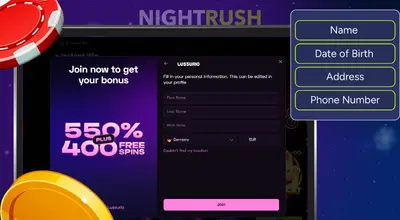
The available material describes an offshore operation licensed in Curaçao and distinguishes it from an operator registered with iGaming Ontario. That distinction matters when evaluating responsible-gambling protections. A Canadian player should not assume that provincial systems, dispute routes, exclusion arrangements or consumer remedies apply in the same way to an offshore site. Geography alone does not prove legality, availability or a particular level of protection.
Before opening an account, read the responsible-gambling section, general terms and privacy information together. Look for the exact method used to request a limit, whether limits can be reduced immediately, whether increases involve a waiting period, and whether self-exclusion applies for a stated duration. Check whether restrictions cover bonuses, live games, mobile browser access and other account areas. If the wording is unclear, ask support for a written answer before depositing.
Also consider practical barriers. Canadian-focused information lists CAD among supported currencies, but currency support does not establish that every control, payment method or withdrawal route is available to every user. An offshore dispute may involve different procedures from those familiar to a provincial player. If certainty about local oversight is essential, compare the account’s terms with a provincially regulated alternative rather than assuming the two environments provide equivalent safeguards.
Use a pause plan when limits are not enough
A responsible-gambling plan should include actions outside the casino account. Remove saved payment details, disable gambling-related notifications and avoid keeping a large balance available for play. Set a calendar reminder to review transactions and time spent. Banking alerts can help identify repeated deposits, although they are not a substitute for an account restriction or professional support.

Write down personal warning signs before they appear. Examples include hiding play, borrowing money, chasing losses, missing work, losing sleep or feeling distressed when unable to gamble. Match each sign to a clear action: end the session, activate a cooling-off period, request self-exclusion or speak with a trusted person. A prearranged plan is easier to follow than a decision made while upset or trying to recover money.
If a limit has been reached, do not negotiate with yourself by switching devices, payment methods or accounts. Stop and reassess. The available account information mentions deposit, wagering, loss, session and time controls, reality checks, cooling-off periods and self-exclusion, but it does not prove that any safeguard can prevent all access in every circumstance. When control is slipping, seeking confidential help is a stronger step than trying another setting.
Questions Canadians often ask about gambling controls
Can a deposit limit prevent all gambling losses?
No. It limits deposits rather than guaranteeing a particular loss amount. Existing balances, other accounts, alternative platforms and payment methods may remain outside its scope. A player should confirm the setting’s period and coverage, then consider wagering, loss or session limits. Self-exclusion may be more appropriate when access itself is the concern.
Is self-exclusion the same as closing an account?
Not necessarily. Closing an account may be an administrative action, while self-exclusion is a specific responsible-gambling restriction intended to prevent access for a defined period. The exact effect depends on the operator’s terms. Request it through the stated support channel, retain confirmation and do not create another account to bypass it.
What should someone do if gambling feels difficult to control?
Stop depositing and end the session rather than attempting to win losses back. Activate a cooling-off period or self-exclusion, remove convenient payment access and tell someone trustworthy. Seek confidential support through a Canadian responsible-gambling service or local health provider. Technical limits are useful, but professional help may be necessary when harm is already occurring.
